
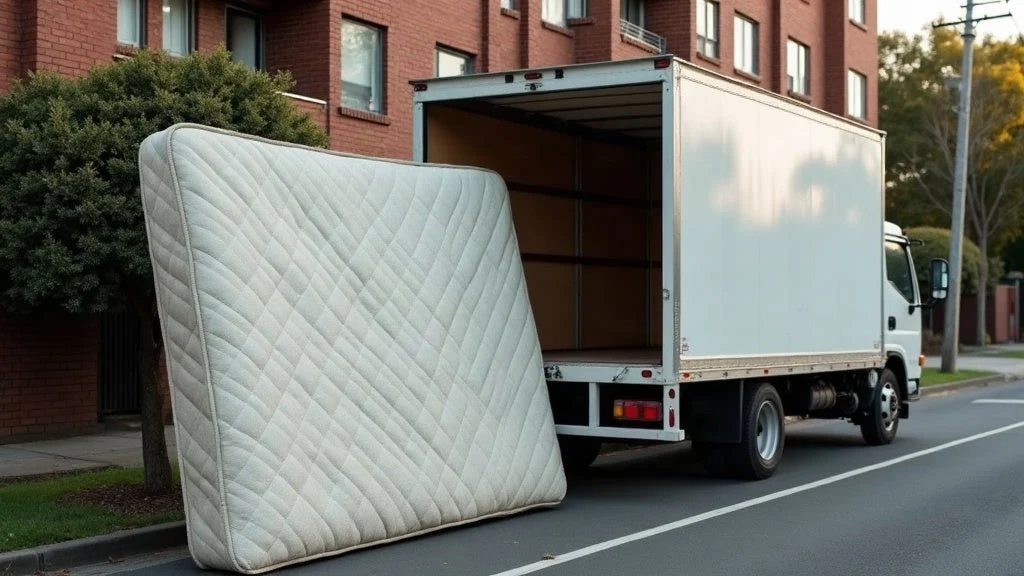

Getting a mattress out of a Sydney apartment has little to do with the mattress and almost everything to do with the building. Lifts, strata rules, parking limits and timing decide whether the job takes twenty minutes or two weeks. The right sequence is simple: check what you have, check what the building allows, then pick a removal path that fits both.
Start with the mattress itself
Pull the bedding off and look at what is really there. Most apartment clear-outs involve more than one piece, often a mattress plus a base or frame that has to go at the same time. Note stains, tears, sagging sides and broken slats. Take phone photos from both sides. Those photos help when asking a charity or removal crew if they can take it, because acceptance rules change and depend on condition.
If there is any sign of pests, say so before anyone books or lifts. Small dark spots along seams or live insects are reasons to pause. Avoid cutting the mattress open, dragging it into a hallway or attempting to spray or heat-treat it. Cutting can spread fibers and pests through common areas. Home treatments rarely solve a building issue and can push the problem into neighboring units. Tell the building manager what was seen and ask what process the building uses for pest-affected items. A removal crew also needs that detail upfront so it can bring the right wrap and decide if the job is safe to do.
Measure the real thing. Tape the length and width of the mattress and do the same for the base, including the thickness of each piece. Then measure the unit door and the corridor turn. Check the lift interior separately if access is allowed. Mattresses do not bend around tight corners the way bags do. A large size feels very different on the 18th floor than it did in the shop. Share those numbers with the building contact and with any crew asked to quote. That helps avoid booking a truck when there is no way to move the load.
Check building rules before anything else
An apartment mattress move starts with the building’s access rules. Most Sydney blocks have written rules for bulky waste that set where items can sit and who has to approve it. The building manager or strata contact can explain the current process. Some blocks use a shared waste room, while others use a loading dock for booked moves. Curb placement that works for a house rarely applies to a tower.
Ask four practical questions early. Does the freight lift need booking, and what times are available? Find out where the mattress should wait before pickup and whether it can sit in common areas at all. Ask what parking or dock clearance is needed for a truck. Check whether there are fees or forms tied to bulky moves. Get the answers in writing if possible. It avoids a crew arriving with no legal place to park or load.
Fire safety is non-negotiable. Do not prop fire doors or wedge exit doors. Do not leave a mattress in a stairwell or foyer while waiting for help. Hallways and exits must stay clear. If the lift is small, ask whether the mattress must be carried down wrapped or taken through a service route. Crews work faster when that route is set before arrival.
Book the lift before you book the truck.
Understand the council pickup option
Council pickup looks simple on paper and sometimes it is the right fit. Many local councils around Sydney list a booked bulky waste service for large household items. Details like what is accepted and where it must sit are set by each council and they change. Check the current council page for the address before making plans. Do not rely on what a neighbor did last year.
Apartment rules add a layer. A house might place items at the curb the night before, but a tower often can’t. Common property and dock areas have their own controls. Some addresses use a shared building booking rather than an individual one. The council may ask that items stay inside the unit until the pickup window. If the mattress has to travel through a lift and lobby, that carry still needs a plan even when the pickup itself has no fee.
Timing is the trade-off. Booked dates depend on demand and on the building calendar. End-of-month periods fill fast. If a lease ends on a set date, a council slot that falls after handover does not help. There’s no harm in booking a council slot while comparing other paths, as long as cancellation rules are clear. Just don’t drag the mattress to a basement or curb early and hope it disappears.
Count the real cost of doing it alone
Hiring a ute or trailer for a day sounds cheap until every extra is added. Rental, fuel, tolls and mattress wrap add up. Most renters also need a second pair of hands. A large mattress is awkward in wind and on stairs, catching door frames and scraping paint as it moves. Damage to common areas can come back as a building charge.
Then there’s the drive. Sydney traffic turns a short run into a long one. Parking near a tower is tight, and loading from a dock without blocking others takes coordination.
Transfer stations have queues and gate fees that apply per load. What looked free at home rarely stays free after fuel and fees.
Time off work counts too. Physical strain is easy to underrate, especially when carrying a heavy, floppy load down a long hall and into a lift. If the freight lift is booked, the wait throws off the whole hire window. Returning a hire vehicle late brings another charge. For a single mattress plus a base, the math often favors paying for help.
Choose help that does the inside work
For apartments, the truck is the easy part. The hard part is getting a large, floppy item from a bedroom through a narrow hall and into a lift without marking walls. That inside carry is what separates a general pickup from an apartment-ready crew. Ask who will enter the unit and how many people will come. Ask what wrap is used. Plastic wrap keeps fibers and dust inside during the carry. It also protects lobby paint.
When council timing does not line up or the mattress is still upstairs, a same-day Mattress Removal Sydney service takes over the full inside-to-truck job and moves it to a lawful receiving point. Same-day does not mean instant in a tower. It means a booking that still fits lift hours and street parking rules. Availability shifts with demand and with building windows. A careful dispatcher will ask for floor number and lift type, along with parking clearance and dock approval.
Get scope in writing before confirming. The quote should name the items, the pickup floor and whether stairs are included if the lift fails. It should state what happens if the mattress won’t fit in the lift. Extra carry and waiting time should have clear charges, and extra items need a clear price too. Share photos and measurements. Include any pest detail too, so the crew can price the work accurately and avoid refusing the load on the day. Ask for a receipt that shows the service name and disposal point.
Ask where the mattress will go next
Mattresses are bulky by design. They fill trucks fast and fill waste rooms faster. That is why many residents in Sydney now ask for a recycling path rather than straight disposal. Dismantling separates parts into streams like steel and timber plus foam and fabric. Those streams can go to different receivers for scrap or reprocessing depending on local acceptance. What can be recovered shifts with markets and with condition. A wet load may have fewer paths.
No crew can promise that every kilo avoids landfill. Honest ones won’t try. Ask where loads are taken on a normal run and what paperwork backs that. A lawful receiving point with a gate record beats a vague promise of green disposal. Ask if bed bases and frames travel to the same receiver or to a different one. Timber frames and metal frames each sort in their own way. Upholstered bases sort differently again.
Condition decides the path. Clean and dry parts sort more easily, while torn or damp parts often can’t enter reuse channels. Contamination narrows choices further. That is another reason to keep the mattress wrapped and indoors until pickup. It preserves whatever recovery value is left. If reuse through donation or resale is considered, check current acceptance rules directly with that group. Rules are strict and they change often. Share clear photos and accept a no if the piece falls short.
Time the pickup around the move
Most apartment mattress jobs run on a deadline. A lease ends or a new mattress arrives. A spare room may need to clear for inspection. Mattress removal in Sydney works best when the pickup is organized around those dates rather than squeezed after them. Delivery drivers won’t wait while an old base blocks the hall. Building caretakers won’t hold a lift past booked hours.
Start from the hard date and work back.
If handover is Friday, aim for removal by Tuesday or Wednesday. That buffer covers a missed dock slot or a lift fault. It also leaves time to vacuum under the bed and wipe skirting boards. If a new mattress is coming, ask the retailer about delivery width and stair rules. Share those notes with the removal crew. The old piece going out and the new piece coming in should not cross in a narrow corridor.
Month-end pressure is real. Many moves cluster in the same week, tightening both lift and truck calendars. Booking early gives more choice on time. Late bookings can still work, but options narrow to early mornings or midday gaps. Keep the quote and the receipt in one place, along with building messages. Photos of clear halls and dock tickets help if questions come up later. A little room in the schedule beats a rushed lobby carry on moving day.
Check the piece and get building approval. Weigh council pickup against private help and lock in timing with room to spare. Done in that order, the mattress can leave without a last-minute scramble over access or parking.
Comments are closed.